Biodegradable Polymers in Drug Delivery: Design, Degradation, and Drug Release Dynamics
DOI:
https://doi.org/10.64474/3107-6688.Vol2.Issue1.3Keywords:
- Biodegradable Polymers, Drug Delivery, Controlled Release, Polymer Degradation, Nanoparticles, PLGA, Polymeric Microspheres, Stimuli-Responsive Polymers, Personalized Medicine, Pharmaceutical Formulation.
Abstract
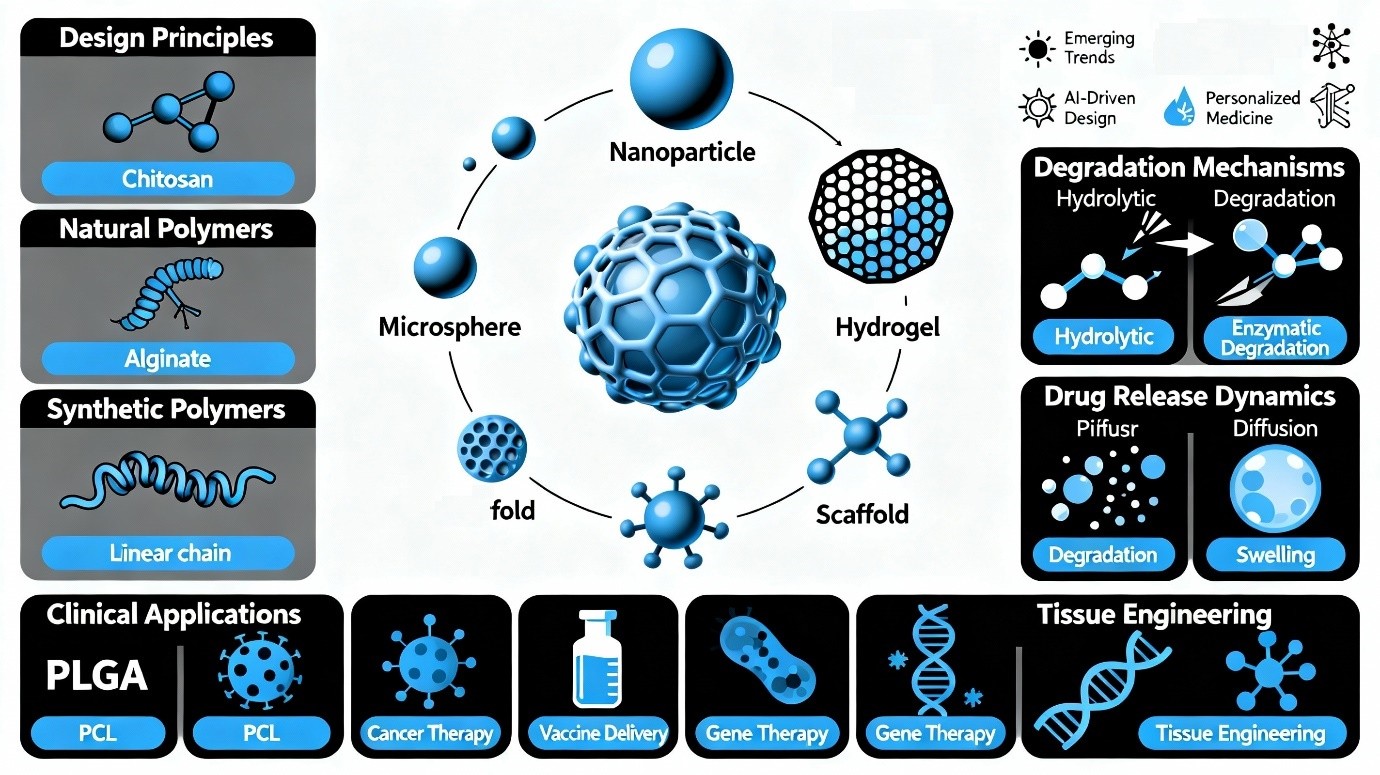
Biodegradable polymers have emerged as essential components in advanced drug delivery systems, enabling controlled, sustained, and site-specific therapeutic release while minimizing systemic toxicity. This comprehensive review covers the design principles, degradation mechanisms, and drug release dynamics of natural and synthetic biodegradable polymers such as PLGA, PCL, chitosan, and alginate. Their adaptability allows fabrication into nanoparticles, microspheres, hydrogels, and scaffolds tailored to various clinical needs, including cancer therapy, vaccine delivery, gene therapy, and tissue engineering. The review discusses hydrolytic and enzymatic degradation processes, surface versus bulk erosion behaviors, and factors influencing polymer degradation and drug release kinetics. Case studies highlight FDA-approved formulations leveraging these polymers for enhanced therapeutic efficacy and patient compliance. Challenges such as variability in degradation rates, formulation stability, manufacturing scale-up, and regulatory hurdles are addressed. Emerging frontiers in smart stimuli-responsive systems, hybrid polymers, AI-driven design, and personalized medicine underscore the future potential of biodegradable polymers as cornerstones of precision and sustainable therapeutics.