Boundaries in flux: Climate Change's Impact on the Global Distribution of Vector-Borne Diseases(VBD), Histology, Pathogenesis, Modern Threats and Control
DOI:
https://doi.org/10.64474/3107-6688.Vol2.Issue1.7Keywords:
- Climate change, Animal vector-borne diseases, Tick-borne infection, Bluetongue virus; Mosquito range expansion, Wildlife host–parasite interactions
Abstract
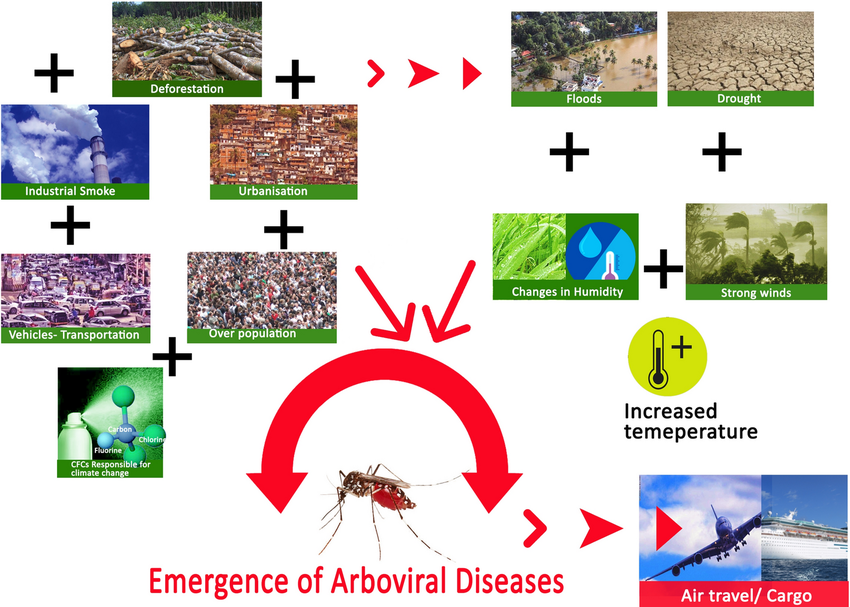
More and more, scientists are acknowledging that climate change is a major ecological factor that influences the spread and transmission of diseases carried by vectors in animals. The habitats of vectors, the length of the growing season, and the rate of disease growth in arthropod vectors are all being impacted by the changing climate. The effects of climate change on the disease systems of livestock, wildlife, and companion animals are summarized in this review, which draws on fifteen important studies. The results show that as temperatures rise, vectors have a better chance of survival and can spread to higher latitudes and higher elevations. Notable instances of redistribution caused by climate change include tick-borne diseases, ruminant bluetongue epidemics, and the extension of mosquito ranges. Estimating the future magnitude of diseases is fraught with uncertainty because to methodological heterogeneity and a lack of long-term data, even if models that forecast future weather conditions indicate that climate suitability zones will continue to expand. In order to protect animal health and ecological stability, it is crucial to implement climate-informed veterinary surveillance and enhance predictive modeling. The research suggests that climate change amplifies the transmission of illness in animal vector systems.