Nanotechnology-Enabled Phytopharmacology: Advanced Nanocarrier Strategies for Enhancing Bioavailability, Targeted Delivery, and Clinical Translation of Plant-Derived Therapeutics
Keywords:
- Phytochemicals, nanocarriers, nanotechnology, bioavailability, targeted delivery, polymeric nanoparticles, lipid-based carriers, natural product
Abstract
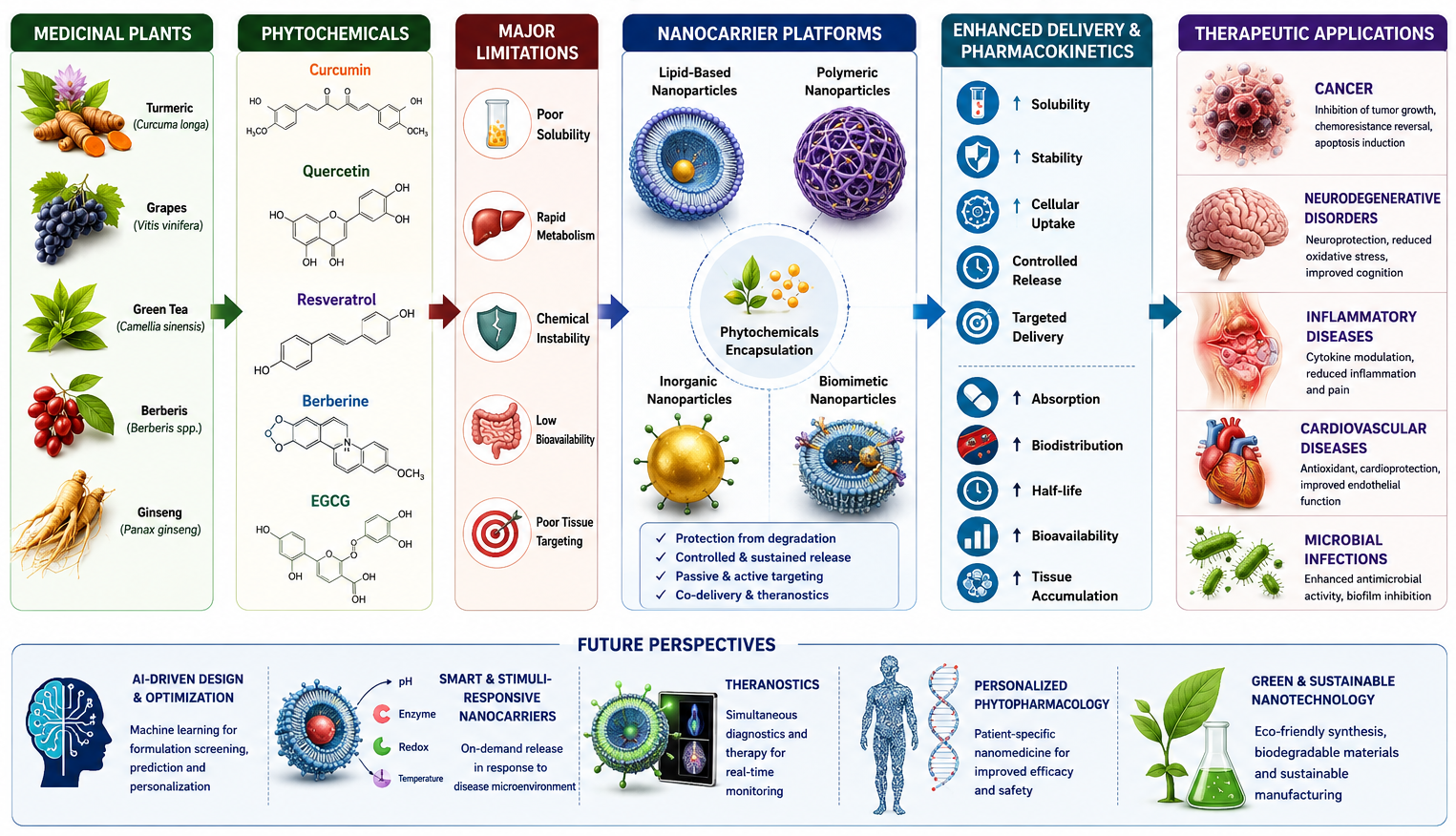
Phytochemicals derived from medicinal plants have attracted considerable attention owing to their diverse pharmacological activities, including anticancer, anti-inflammatory, antimicrobial, antioxidant, and neuroprotective effects. Despite their promising therapeutic potential, the clinical application of many phytochemicals remains limited due to poor aqueous solubility, low bioavailability, rapid metabolism, chemical instability, and insufficient accumulation at target sites. Recent advances in nanotechnology have provided innovative strategies to overcome these challenges through the development of sophisticated nanocarrier systems capable of enhancing the delivery and therapeutic performance of plant-derived bioactive compounds.
Various nanocarrier platforms, including lipid-based nanoparticles, polymeric nanoparticles, inorganic nanomaterials, and biomimetic delivery systems, have demonstrated significant potential in improving phytochemical solubility, stability, pharmacokinetics, and tissue-specific targeting. These nano systems protect bioactive molecules from premature degradation, facilitate controlled and sustained drug release, and enhance cellular uptake through passive and active targeting mechanisms. Nano formulations such as curcumin-loaded PLGA nanoparticles, quercetin-loaded lipid nanocarriers, and stimuli-responsive delivery systems have shown superior bioavailability, enhanced therapeutic efficacy, and improved biodistribution profiles in both preclinical and clinical investigations.
In addition to improving therapeutic outcomes, multifunctional nanoplatforms enable the simultaneous delivery of multiple phytochemicals and diagnostic agents, paving the way for theragnostic applications and precision medicine approaches. Nevertheless, several challenges continue to hinder the widespread clinical translation of phytochemical nanomedicines, including formulation stability, large-scale manufacturing, batch-to-batch reproducibility, long-term safety assessment, immunogenicity concerns, and regulatory standardization.
Future developments are expected to focus on smart and stimuli-responsive nanocarriers, artificial intelligence-assisted formulation design, personalized phytopharmaceutical strategies, and environmentally sustainable synthesis approaches. Overall, the convergence of nanotechnology and phytopharmacology represents a transformative advancement in natural product-based therapeutics, offering new opportunities to maximize the therapeutic potential of phytochemicals while improving safety, efficacy, and patient outcomes.