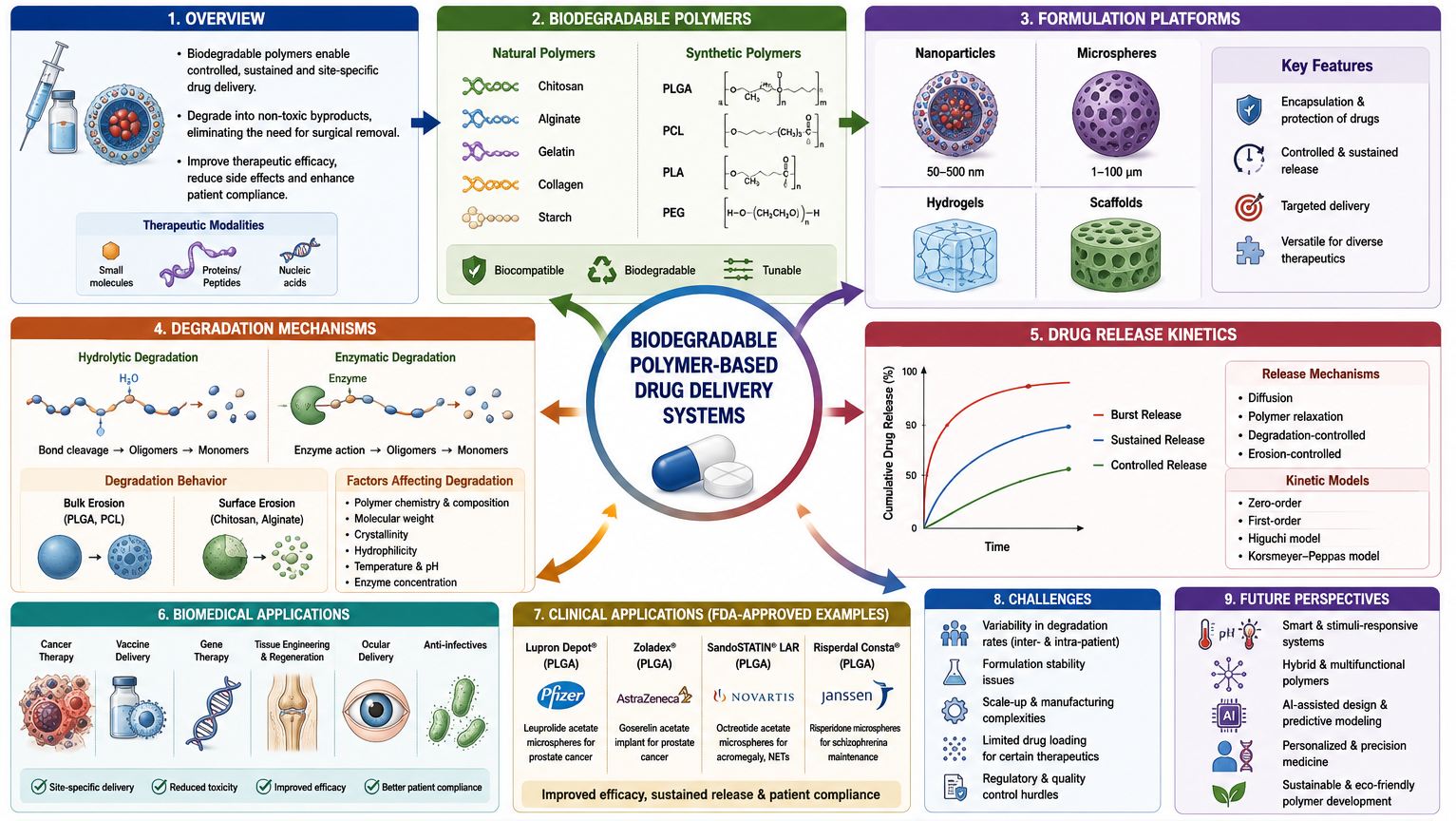
Design, Degradation Mechanisms, and Drug Release Kinetics of Biodegradable Polymers in Advanced Drug Delivery Systems: Applications, Challenges, and Future
Keywords:
- biodegradable polymers, drug delivery, controlled release, polymer degradation, nanoparticles, PLGA, polymeric microspheres, stimuli-responsive polymers, personalized medicine, pharmaceutical formulation.
Abstract
Biodegradable polymers have stood out among other templated macromolecular materials as fundamental components of advanced drug delivery systems, providing controllable, sustained and site-specific release of therapeutics with lower toxic side effects. We present a complete review of the design concepts, degradation principles and drug release kinetics of natural and synthetic biodegradables like PLGA, PCL, chitosan, and alginate. The adaptability of naturally occurring substances allows them to be fabricated into nanoparticles, microspheres, hydrogels and scaffolds for different clinical applications such as cancer therapy, vaccine delivery, gene therapy and tissue engineering. This review covers hydrolytic and enzymatic degradation mechanisms, surface or bulk erosion behavior of polymers, and parameters affecting polymer degradation and drug release kinetics. These polymers have been used in FDA-approved formulations, which are shown in a few case studies to result in both improved therapeutic efficacy and patient compliance. It discusses challenges including inter- and intra-protein degradation rate variability, formulation stability issues, scale-up of manufacturing process difficulties, and regulatory hurdles. The continuing advances at the emerging frontiers of smart, stimuli-responsive systems, hybrid polymers, AI-assisted design, and personalized medicine suggest a bright future for biodegradable polymers in engineering precision and sustainable therapeutics.